Leak Detection in Frazier Park, CA
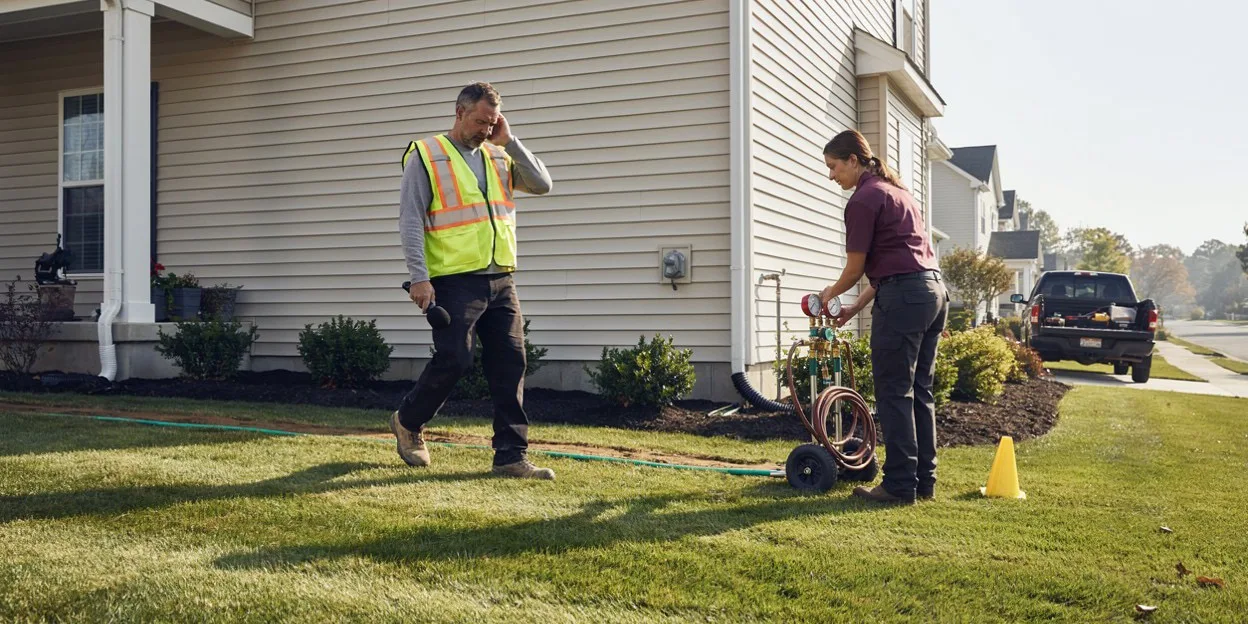
The well pump kicks on every twenty minutes with every faucet closed, and there is a soft spot in the hallway floor near the bathroom. Nothing is dripping anywhere you can see. This site connects you by phone with an independent local provider who does leak detection in Frazier Park and across southern Kern County.
What the crew does first
First they confirm there is a leak. With every fixture off, the crew watches the meter if the house is on a district system, or listens for the pump on a well. If the dial keeps turning or the pump keeps cycling, water is going somewhere. Then they isolate. Closing the house valve tells them whether the leak is inside the house or out in the yard line.
To narrow it down they use listening gear on the lines, pressure tests on the hot and cold sides, and a thermal camera to spot a cold stripe on a wall or floor where water is moving. On a raised-floor house they go under the house with a light, because a leak in the crawl space is often visible once someone looks. The goal is to mark the spot before anyone opens anything.
What to do in the next hour
Turn off every faucet and appliance that uses water. If you are on a district line, go look at the meter and write down the reading, then check again in an hour. If you are on a well, listen for the pump and note how often it runs.
If you hear water running when nothing is on, or a floor is cold and damp underfoot, shut the house valve for now and see if the sound stops. Do not start cutting into walls on your own. Take a photo of the damp spot and any stains.
What is usually saved and what is not
Finding the leak early usually means a small repair. Once the spot is marked, the fix is one of three things. Open the wall or floor at that point and repair the pipe. Abandon the buried or buried-in-wall section and reroute a new line. Or repipe the house. The provider you speak with can explain which one fits your home.
Flooring and drywall over the leak are the main casualties. Walls and cabinets near a leak that ran for a while may need structural drying once the pipe is fixed. If the wet spot is at the base of the water heater instead, see water heater leak cleanup. If the leak is in the yard line between a well or meter and the house, the yard gets dug, not the floor.
Kern County notes: mountain plumbing
Cabins in Frazier Park, Lake of the Woods, and Pine Mountain Club were plumbed in the 1950s through the 1970s and repaired in pieces ever since. Galvanized pipe from the early years corrodes from the inside. Copper that runs through an uninsulated exterior wall or under a raised floor freezes in a hard winter and develops a pinhole or a split that only shows up as a slow leak once it thaws. Yard lines from the meter box to the house are often shallow and get nicked by frost and tree roots.
Many homes up here are on a small district or mutual water company, and the meter is the first place to look for a jump. Homes in Cuddy Valley, Lockwood Valley, and the ranch lots off Frazier Mountain Park Road are often on private wells, where the only sign is a pump that will not rest and a pressure tank that cycles all night.
In the valley towns, the story is the slab. Tract homes in Arvin, Wasco, and Delano from the 1960s onward carry supply lines under the concrete, and a warm spot on the floor or a bill that climbs with no change in habits points below. Many policies cover the sudden damage a leak causes but not the pipe repair itself, and a leak that ran for months may be treated as gradual. Ask the crew for photos, the meter or pump notes, and a written note of where the leak was found for your adjuster.
Calling about leak detection
Have the address, your last two water bills if you are on a district, and notes about where the floor is cold or where you hear water. Say whether the home is on a well, on a slab or a crawl space, and whether you have already shut off the main. Call (661) 605-4547.