Water Damage Restoration in Delano, CA
Delano is the second-largest city in Kern County and the northernmost, a railroad town founded in 1873 on the flat between Highway 99 and the grape fields. It is where the 1965 grape strike began and where the United Farm Workers built their first headquarters on forty acres of bare ground west of town in 1966. The housing is a century of layers: prewar bungalows near the tracks, 1950s and 1960s ranch houses, and the newer subdivisions that came with the prisons and the warehouses. Nearly all of it is on a slab.
Summers here run past 100 degrees for weeks, and the garage is the hottest room in the house. Winters bring tule fog and, in a wet year, water standing in the fields and the older streets.
This site connects Delano homeowners with an independent local water damage provider by phone. The provider looks at the house and sets the scope.
Delano water damage on the valley floor
A tank in a garage that hits 110 degrees in August fails early, and water heater leak cleanup handles the floor and the wall behind it. Copper under a 1960s slab that pinholed shows up as a warm spot or a bill that jumped, and leak detection marks it before anyone cuts concrete. After either, structural drying is what gets the walls back down.
Where to call in Delano
The city runs its own water and sewer, and City of Delano Public Works handles leak reports and meter shutoffs from its yard on South Lexington Street. Rebuild permits go through the city as well. The Forty Acres, the old UFW headquarters on Garces Highway, became a National Historic Landmark in 2008 and is the address the rest of the country knows Delano by.
Call (661) 605-4547 to be connected with a local water damage provider serving Delano.
Services Available in Delano
Water Extraction
Standing water pumped out of a cabin, garage, or living room, then the first meter readings to see how far it traveled.
Structural Drying
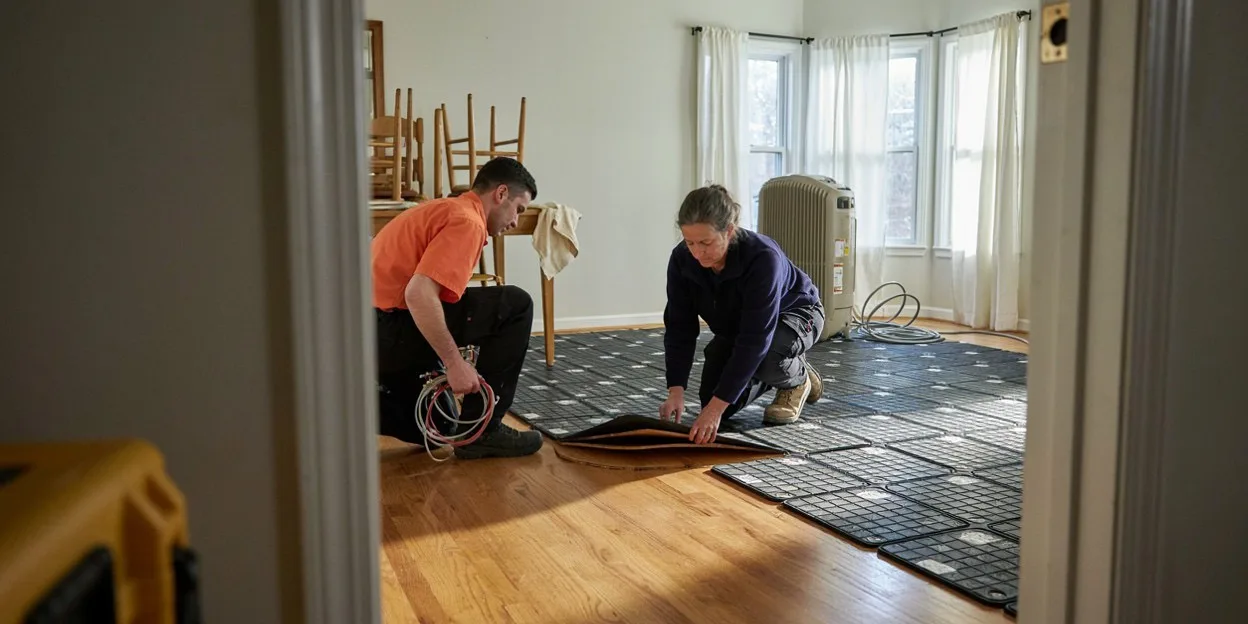
Air movers and dehumidifiers run by the readings until subfloor, framing, and drywall come back to their dry target.
Leak Detection
Finding a hidden supply-line, wall, or under-floor leak on a mountain lot before anyone opens a wall.
Frozen Pipe Cleanup
Cleanup after a pipe froze and split in an exterior wall, crawl space, or empty cabin, then drying what the thaw soaked.
Burst Pipe Water Damage
The rooms, floors, and walls a failed supply line reached, pumped out and dried once the water is shut off.
Roof Leak Water Damage
Wet insulation, ceilings, and walls dried out after snow load, an ice dam, or a summer storm found a way through the roof.
Water Heater Leak Cleanup
A failed tank in a closet, garage, or utility room and the flooring and drywall it soaked.
Crawl Space Water Extraction
Standing water pumped from under a pier-and-post home, then joists and subfloor checked and dried.